
Asking somebody if they ever had a CBR600F2 is like asking if they’ve ever tried McDonald’s fries or flown in a 737. Just ask what year or color, because when it comes to sportbikes, I can’t think of many that rival the F2’s mix of handling, performance, reliability and value, which is why everyone I know had at least one.
For the equivalent of about $9000 in today’s money, you got a 470 pound (gassed up) motorcycle that put about 85 horsepower to the pavement, good for a 130-mph-plus top speed. The 41mm front suspension was race spec back then, and the brakes were similarly good. The reach to the bars was sporting but all-day comfortable, the seat broad, comfy and easy to move around on, and wind protection from the classically styled fairing kept wind blast under control at high speeds. But the best part about the F2 was the handling. Neutral and stable, yet easy to steer and rock-solid in any situation, the F2 made mediocre riders like me feel like heroes, and talented riders like Miguel Duhamel and Josh Hayes seem God-like.
The second-best part? You could beat the crap out of an F2, maintain it like you were a meth head with ADHD and it would never leave you stranded (crappy regulator-rectifiers aside). No wonder the Sunday Morning Ride was dominated by F2s all through the ’90s. Crash on Sunday, ride on Monday.
Honda stopped making all-arounder supersports about 10 years ago—the CBR600F4i was the last of the F2’s progeny—opting to keep up with the other OEMs with its focused CBR600RR. It’s faster, lighter…and priced north of $11,000. In Europe and other markets, there’s demand for a sporty standard that’s tough, durable, comfortable, good handling—and affordable. Honda’s Hornet was such a bike, using the 600RR motor in a steel frame, but American Honda didn’t offer it here, probably because naked bikes like it didn’t do so well here. Americans used to want their sportbikes with fairings.
Well, here you go. Honda says the 2014 CBR650F is an all-new design, optimized for all levels of ability while still being inviting for new riders. It’s not a dumbed-down sportbike chassis and motor—instead, Honda started with a clean sheet, designing the chassis and dohc, liquid-cooled motor just for this model. You can get more detailed specs and info from Dirck’s first ride report, but here are the highlights:
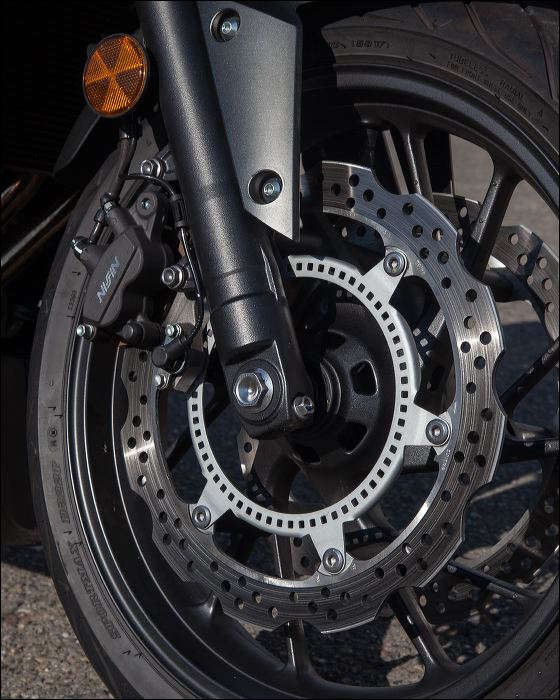
It may be all new, but F2 fans will think they’ve gone back in time. The twin-spar steel frame puts 57 inches between the supersport-sized tires, and say “nice to see you again” to the nonadjustable 41mm fork and two-piston front calipers, but at least Denso ABS is available for an extra $500. The motor looks like the first-gen 600RR’s, but the stroke is a little longer to give it 649cc, and compression is down as well. We won’t tear down and measure the cylinder heads to confirm my suspicions that the ports and valves are sized for optimal low and midrange power. But power is a good 20 percent less than the 600RR’s—although fuel consumption is much better.
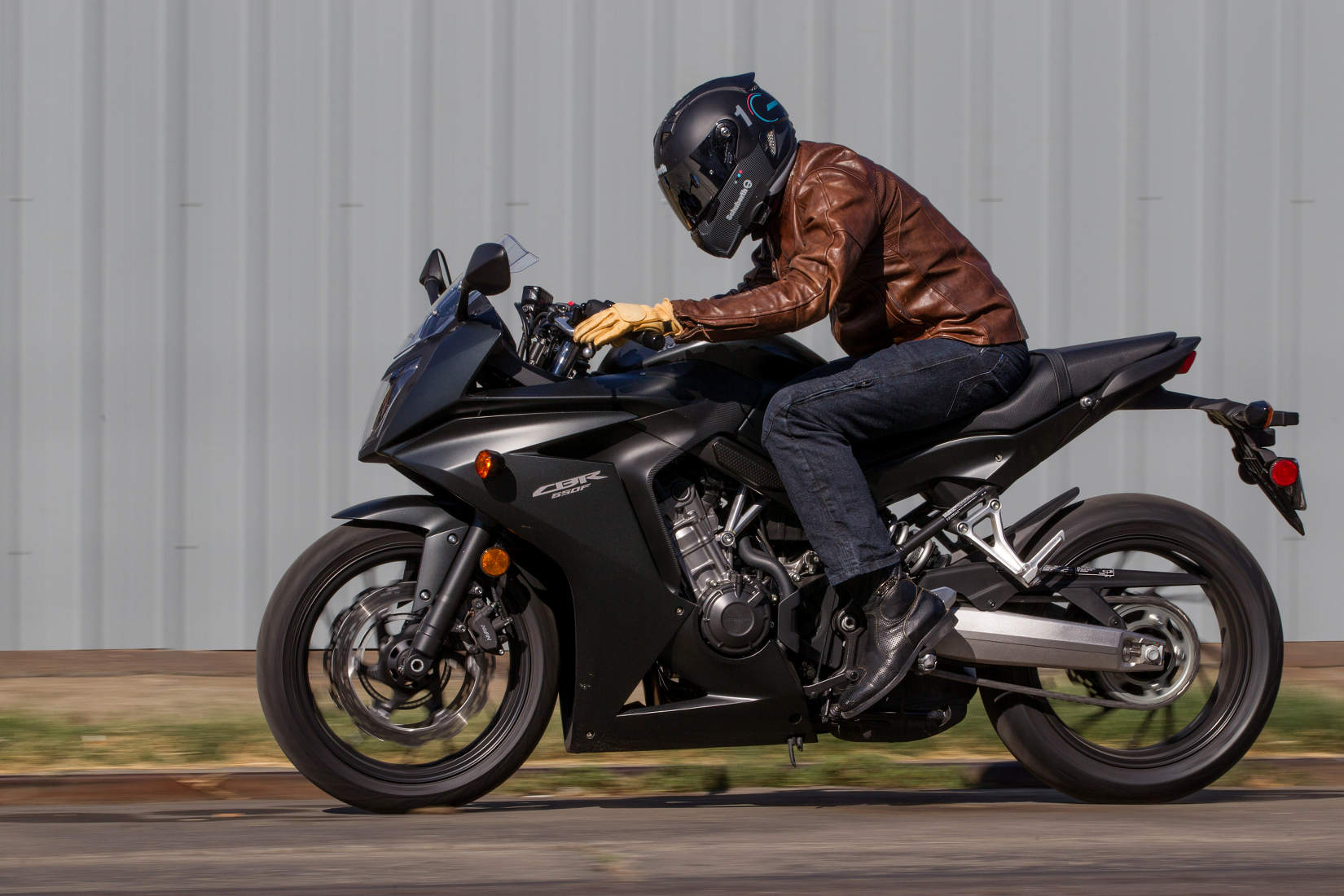
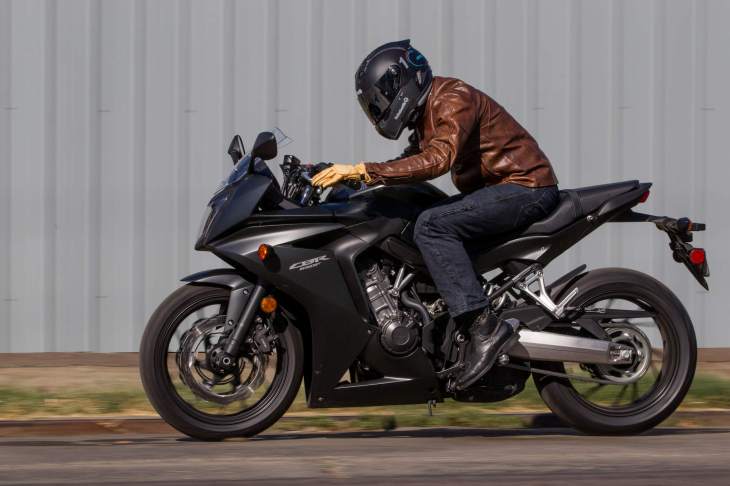
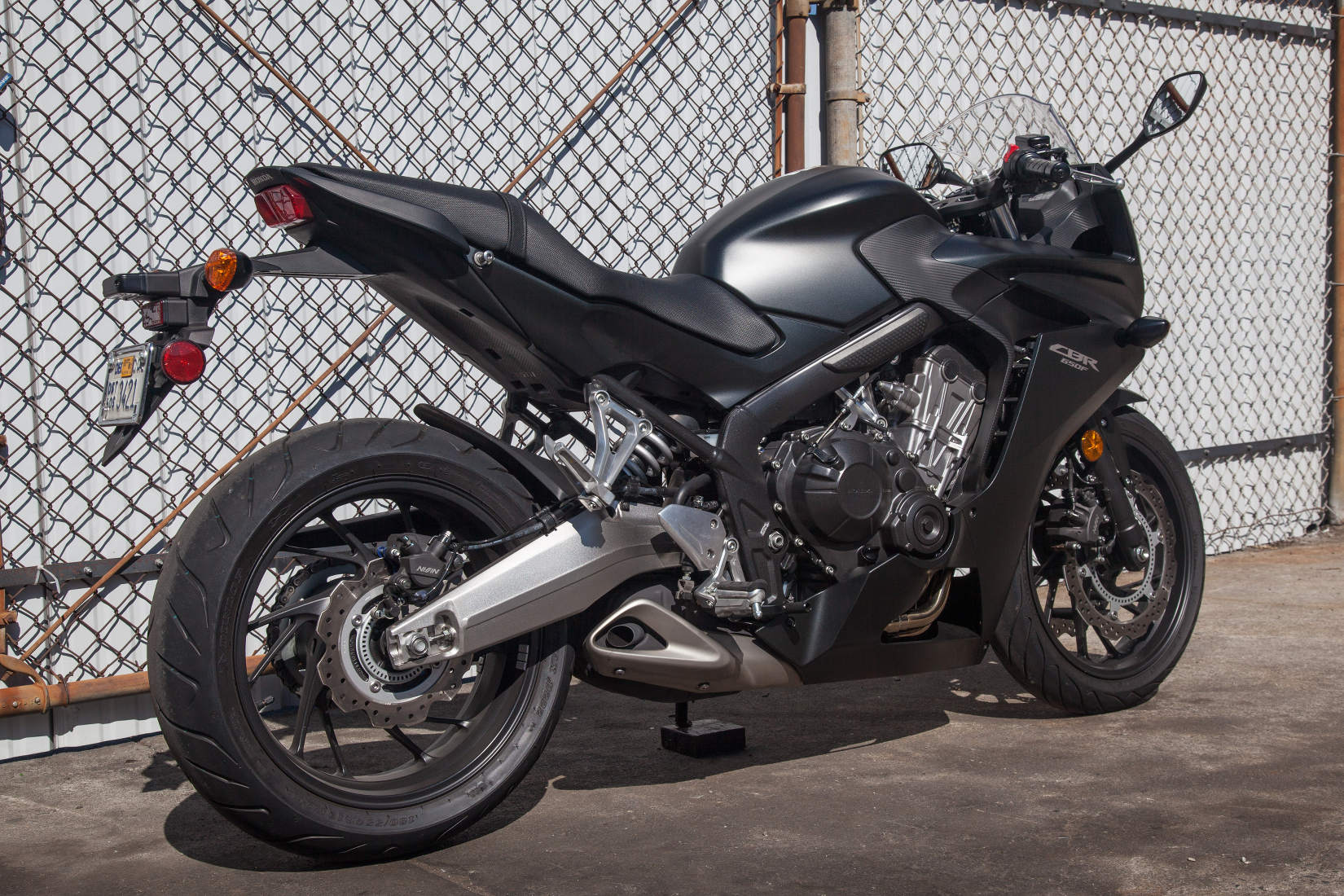
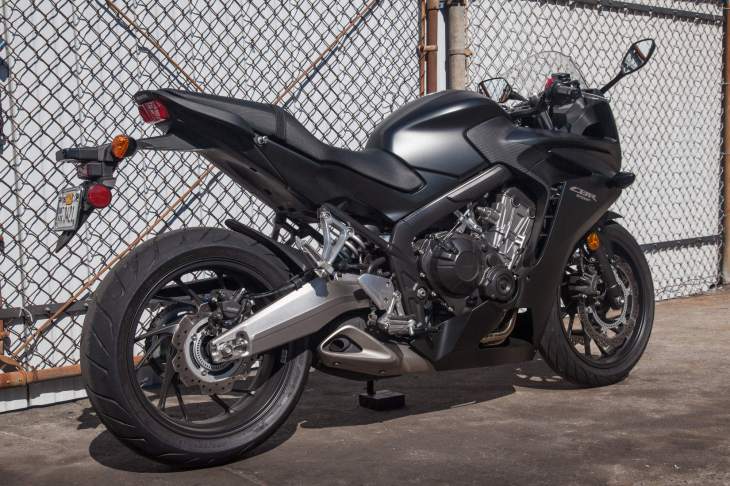
It’s all wrapped up in sleek, modern bodywork and gets a bevy of features you’d expect from more expensive motorcycles. The aluminum swingarm and GP-style four-into-one exhaust look great, as do the abbreviated tail section and 14-spoke wheels. The bulbous tank looks a little odd, but then you realize it holds 4.5 gallons and doesn’t affect comfort. The bars are in a sporty position, but are still pretty comfortable, and the instrumentation offers enough info to get your geek on. All in, the bike weighs 461 pounds (467 ABS)—the F2 weighed in at 455—and retails for $8,499 ($8,999 with ABS), about what you’d spend on an F2 in 1991.
Luckily, it’s not still 1991. The specs read like an F2’s, but the 650F is a refined and modern-feeling ride. The motor is smooth, and the PGM-FI fuel-injection means you can ride off as soon as you start it up. Power is also F2-ish: around 80 hp at the back wheel, but it’s available at lower rpm, making the motor more flexible and noob-friendly, but plenty fast enough to get you into trouble or keep up with even slightly insane friends on more focused sportbikes.
For sporting use, the 650 should keep 90 percent of riders happy with its ability. It’s heavy, but 461 pounds isn’t really much these days, and it feels light enough. It’s easy to steer and mirrors the F2’s do-no-wrong personality, and is precise and easy to ride. The forks are set up decently and control the front wheel while providing a comfortable ride, and the shock—which has no linkage but at least is adjustable for preload—keeps things in line back there, too. The brakes are a little better than you’d expect, but won’t fool you into thinking there are more than two pistons per caliper—but they do the job well. I was very impressed with how well the ABS worked. It’s remarkably non-intrusive.
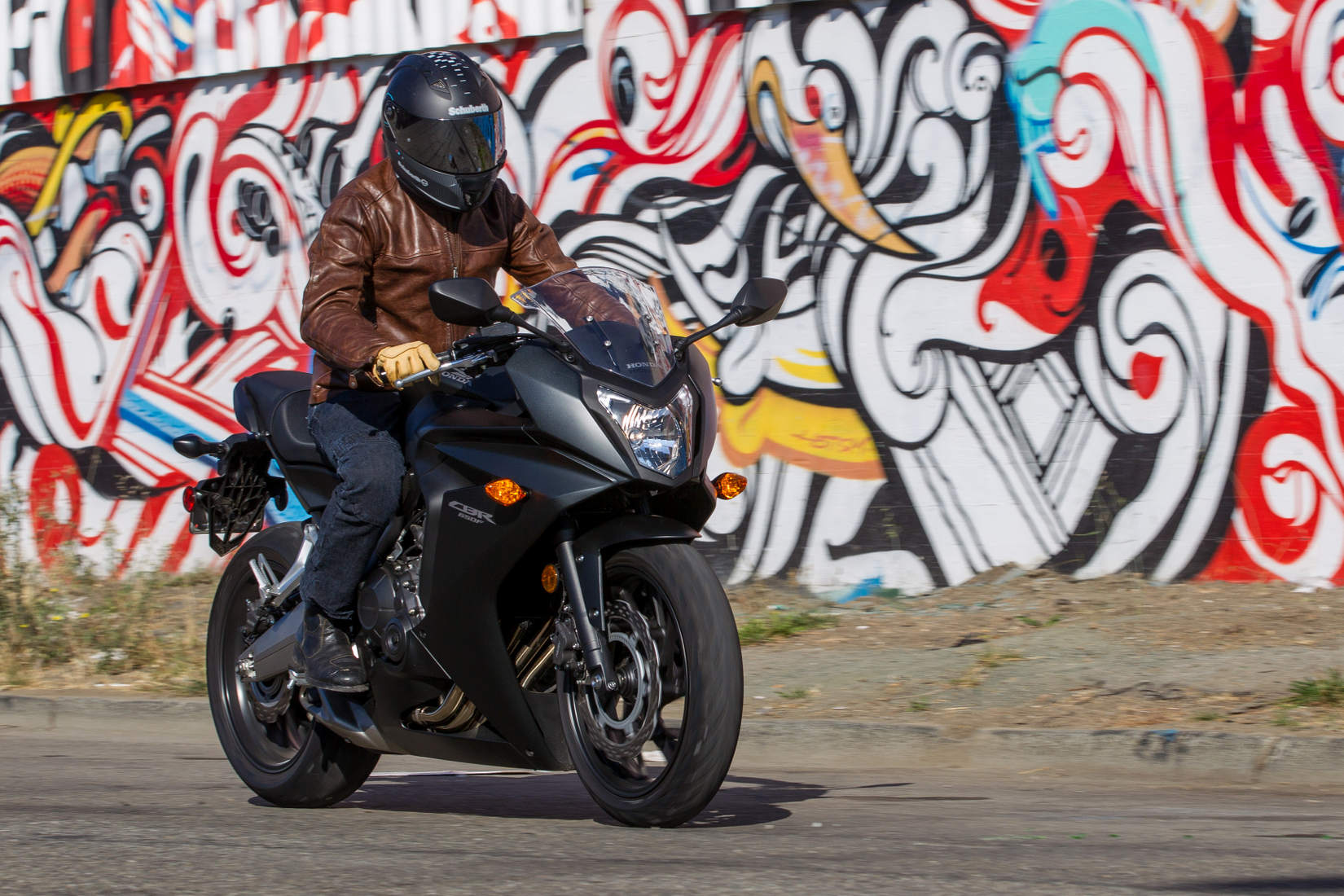
On the freeway, the little CBR shines. I actually rode it up I-5 from Southern California back-to-back with Honda’s Interceptor, and I kept thinking that the $8,500 motorcycle was almost as good for touring as the $12,500 motorcycle. I saw 50-plus mpg, which put 200 miles between fill ups, and the seat and wind protection were pretty good (I am a shorty, though, so taller folk may feel differently). I think it would be hard to beat as a commuter, given its range, economy, low price, narrow profile and easy handling.
I’ve typed the phrase “hard to beat” so frequently I’ve programmed a macro for it in Microsoft Word, but this time I mean it. I had a traumatic experience avoiding an ancient VW microbus that decided it needed to turn left in front of me while I was booking it through a corner on a remote two-lane road. Without thinking, I rolled on gas and let my line widen, missing the back end of the bus by inches. Aside from making me reconsider my place in the world vis-a-vis riding on two wheels, I was glad I was on the CBR, which now felt like an old, trusted friend. For the price, you really can’t beat it, whatever your experience level. It may be all new, but it doesn’t feel any different at all, and that’s okay—sometimes you do it right the first time, and there’s no reason to re-invent the wheel.
You can follow any responses to this entry through the RSS 2.0 feed. Both comments and pings are currently closed.